Yoga at Home Essentials for Beginners: What You Need
Welcome to StillYoga. If you’re starting a yoga practice at home, this guide covers the yoga essentials you need to build a mindful, supportive, and sustainable home yoga setup. Whether your goal is to improve strength, flexibility, or relaxation, these beginner-friendly tips and product recommendations will help you tune into breath, posture, and movement with ease.
Why a Thoughtful Home Yoga Setup Matters
Creating a small, intentional space for practice helps you stay consistent, reduces tension in joints, and deepens your breathing. A good setup combines reliable yoga gear, props and accessories, and a calm environment that supports both active vinyasa flow and restorative yin sessions.
Beginners: Core Yoga Essentials (What to Buy)
Start with a few must-haves that make movement safer and more enjoyable. These essentials are beginner-friendly, high quality, and easy to store.
- Yoga mat: A non-slip, supportive mat (around 5mm is a common beginner choice) provides grip and cushioning for joints and alignment.
- Yoga blocks: Foam or cork blocks add stability and help adjust poses to your body, improving posture and balance.
- Strap: A simple strap aids flexibility and helps you access stretches without forcing your body.
- Yoga towel and socks: A sweat-absorbent towel or non-slip socks keep you comfortable during sweaty practices.
- Water bottle: Staying hydrated during practice is essential—keep a reusable bottle nearby.
- Candles or diffuser: Soft lighting and scent support relaxation and help reset the nervous system for restorative practice.
How Each Item Helps
Yoga Mat
Your mat is the foundation of your home yoga practice. A high-quality, eco-friendly mat (natural rubber or cork) offers non-slip grip and support for standing, balance, and seated poses. For many beginners a 5mm thickness gives enough cushion for knees and hips without sacrificing stability.
Yoga Blocks
Blocks are a must-have prop for alignment. Use them to raise the ground to meet your hands in forward folds, support hips in seated poses, or stabilize balance postures. Foam blocks are lightweight; cork blocks are eco-friendly and durable.
Strap
A strap increases reach safely and helps deepen hamstring and shoulder stretches. It’s an essential accessory for improving flexibility over time without straining joints.
Practical Tips and a Simple Routine
Below is a short routine focused on alignment, breathing, and foundational movement. Aim for 15–30 minutes, 3–5 times a week to build momentum.
Beginner Yoga Routine (Short & Effective)
- Center & Breathe (2–3 minutes): Sit cross-legged, inhale deeply, exhale fully. Tune into your intention for the practice.
- Cat-Cow (5 rounds): On all fours, move spine with breath to warm up the back and shoulders.
- Downward Dog (5 breaths): Pedal the feet to stretch calves and hamstrings; use blocks if hands don’t reach the ground comfortably.
- Low Lunge (2 each side): Use a strap around the back foot if stretching the hip flexor is intense.
- Warrior II (3 breaths each side): Focus on alignment and grounding through the back heel for stability and strength.
- Seated Forward Fold with Block (3 breaths): Use a strap if hamstrings feel tight.
- Supine Twist & Savasana (5 minutes): Finish with gentle twists and a 3–5 minute relaxation. Breathe deeply to release tension and reset the nervous system.
Home Yoga Environment: Create a Calming Studio at Home
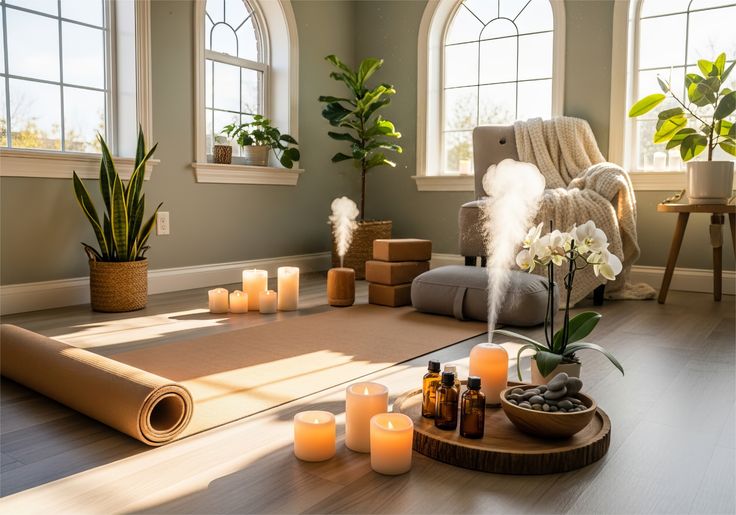
Turn a small corner into your personal studio. Tips to create an intentional home yoga setup:
- Choose a flat, clutter-free ground with good natural light.
- Layer a yoga mat on a non-slip rug if needed for extra stability.
- Keep props and accessories in an accessible bin or shelf to reduce friction when starting practice.
- Wear supportive activewear that lets you breathe deeply and move with ease.
- Use candles or soft lighting to support restorative sessions and nervous system reset.
- Consider eco-friendly materials (cork, natural rubber, sustainable foam) to align with a mindful lifestyle.
How to Adjust and Progress
As you move through your yoga journey, adjust props to deepen alignment and reduce strain. A yoga instructor or reputable online classes can help you refine posture and technique. Don’t rush flexibility — use props to get alignment right, then gradually deepen poses.
Progression Tips
- Increase practice length slowly and add one new pose each week.
- Try different styles—vinyasa for strength and flow, yin for deep release and relaxation.
- Track progress with photos or notes about how poses feel to notice improvements in balance and stability.
Combos and Accessories to Elevate Your Practice
Consider small combos that enhance comfort and performance: a cork mat + foam block set, microfibre towel + non-slip socks, or a bolster and blanket for restorative sessions. These combos make it easier to switch between active and restorative practice styles.
Safety, Body & Mind Considerations
Always listen to your body to reduce risk of joint strain. If you have health conditions or are exploring topics like glp-1 and yoga, consult medical professionals for personalized advice. Use props to protect knees, wrists, and lower back and prioritize breathwork to calm the nervous system.
Conclusion: Actionable Steps to Start Today
Ready to begin? Follow these steps:
- Pick a quality yoga mat (non-slip, ~5mm) and a block and strap to start.
- Create a dedicated space with minimal distractions and soft lighting.
- Commit to short, regular sessions—try the beginner routine above 3 times a week.
- Use props to support alignment and gradually deepen your practice.
- Stay hydrated, wear breathable activewear, and tune into breath to keep it mindful.
These yoga essentials will help you build a consistent, supportive yoga practice at home and enjoy lasting benefits for body and mind.
FAQ
1. What are the must-have yoga essentials for beginners?
Start with a good yoga mat (non-slip, supportive), a pair of yoga blocks, a strap, a towel or non-slip socks, and a water bottle. A bolster or folded blanket and candles can enhance restorative practice.
2. How thick should my yoga mat be?
For most beginners a 4–6mm mat balances cushioning and stability; 5mm is a common favorite. Thicker mats protect joints but may reduce balance for standing poses.
3. Do I need expensive brand gear like Manduka?
High-quality brands offer durability and eco-friendly features, but choose gear based on features (grip, sustainable materials, supportive cushion) rather than price alone.
4. How do I set up a home yoga studio?
Choose a quiet, flat area with space to move, keep props within reach, add soft lighting, and clear clutter. Intentional design makes it easier to maintain a routine.
5. Can yoga help reduce stress and improve sleep?
Yes—regular mindful yoga practice, focused breathing, and restorative poses support relaxation, reduce tension, and can help reset the nervous system for improved sleep.
StillYoga — shop thoughtful yoga gear, props and apparel to support your beginner yoga journey. Explore our curated selection of sustainable mats, cork blocks, straps, towels, and more to elevate your practice.
Introduction: Your beginner yoga journey starts at home
Starting a home yoga practice can feel both exciting and overwhelming. With the right yoga essentials and a simple beginner yoga routine, you can create a supportive, eco-friendly studio space in your living room. This guide helps you pick high-quality yoga gear, learn foundational movement and breathing, and build a consistent, mindful yoga journey that boosts strength, balance and relaxation.
Why the right yoga essentials matter
Good equipment reduces distraction, improves posture and prevents injury. For beginners, a non-slip yoga mat and a few supportive props help you focus on alignment, breathe deeply, and tune into body and mind. Whether you prefer vinyasa, yin, restorative or a short morning flow, the right gear supports your intention and makes the practice feel inviting.
Beginner-friendly explanations: key items and why they help
Must-have basics
- Yoga mat (5mm recommended) — A padded, non-slip mat gives cushioning for joints and grip for standing poses. Cork and eco-friendly rubber mats offer great traction for sweaty practices and are sustainable choices.
- Yoga blocks — Foam or cork blocks add stability and bring the ground closer to you. Use them to adjust alignment in forward folds, support hips in seated poses, and deepen restorative holds.
- Yoga strap — A strap helps with flexibility and safe stretching; it’s essential for hamstring stretches and reaching in bound poses when your range is limited.
- Yoga towel and grip socks — Towels keep a sweaty mat dry; non-slip socks provide extra grip if you prefer socks to bare feet.
- Water bottle — Staying hydrated is part of any workout or yoga practice. Keep a bottle nearby to reduce breaks and support circulation.
- Bolster and blanket — For yin and restorative sessions these props support the nervous system and help you relax deeply.
- Candles or diffuser — Create ambiance to tune your intention and make your practice feel intentional and calm.
Practical tips and a simple beginner yoga routine
Environment and preparation
- Choose a quiet ground with enough space to stretch fully.
- Lay down a mat on a stable, clean floor and place props within reach.
- Wear supportive activewear or comfortable clothing that allows movement and breathes.
- Set a short intention for your practice—“balance,” “ease,” or “reset.”
Simple 20-minute beginner routine
- Warm-up (3–4 minutes): Gentle neck rolls, shoulder circles, cat-cow to tune breathing and mobilize the spine.
- Sun-friendly flow (6–8 minutes): 3 rounds of slow vinyasa — inhale to mountain, exhale to forward fold, inhale halfway lift, step back to plank, lower, and move through cobra or downward dog. Focus on alignment and steady breath.
- Standing balance & strength (4–5 minutes): Warrior II, triangle, and a supported tree pose using a strap or wall for stability.
- Floor stretches (3–4 minutes): Seated forward fold with blocks, hamstring stretch using a strap.
- Restorative finish (3–4 minutes): Supported reclining pose with a bolster, blanket over knees, and a few minutes of deep breathing to calm the nervous system.
Product explanation: what to look for when you shop
| Product | Feature to prioritize | Why it matters |
|---|---|---|
| Yoga mat | Non-slip, 4–6mm thickness, eco-friendly (cork or natural rubber) | Grip for balance, cushioning for joints, sustainable materials for long-term use |
| Yoga blocks | Cork or foam, stable edges | Provide support and improve alignment in poses |
| Yoga strap | Durable cotton, adjustable length | Helps with flexibility and safe adjustments |
| Bolster/blanket | Supportive, firm or medium-fill | Essential for restorative and yin practices to reduce tension |
| Towel & socks | Absorbent towel, non-slip socks | Keep grip during sweaty flows and maintain hygiene |
| Water bottle | Leak-proof, easy to hold | Staying hydrated supports recovery and focus |
When you shop for yoga gear, choose high quality items that match your practice style. Brands like Manduka are known for durable mats, but many sustainable cork and biodegradable mat options now support a mindful, eco-friendly lifestyle. Tag your practice with myyogaessentials on social to connect with others building a home studio.
Home yoga environment: setting up a mindful studio
Create a dedicated corner or a full studio vibe depending on your space. Here are quick tips to elevate your home yoga setup:
- Layer a mat with a towel for sweaty sessions and add a mat anchor or sandbag for extra grip.
- Keep props and accessories organized on a small shelf so everything is reachable during flow.
- Use natural light, plants, and a candle or diffuser to reduce stress and support relaxation.
- Play soft music or follow a trusted yoga instructor app to deepen your practice and stay motivated.
Intentional design boosts consistency—treat your space as a safe place to tune, breathe deeply, and reset.
Building trust and growing your practice (E-E-A-T)
As you progress on your beginner yoga journey, learn from qualified teachers, follow evidence-based guidance, and choose high-quality props that support posture and joint safety. Combining mindful movement with breathing practices deepens flexibility, reduces tension, and calms the nervous system. If you have health concerns, consult a healthcare professional or certified yoga instructor before starting.
Conclusion: actionable steps to start today
Ready to begin? Follow these three simple steps:
- Pick a supportive yoga mat (5mm is a good starting thickness) and one or two props: a block and a strap.
- Set a daily 10–20 minute beginner yoga routine focusing on breath, alignment and gentle movement.
- Create a small, intentional space—add a towel, water bottle and a bolster for restorative sessions.
Small, consistent practice builds strength, balance and ease. Start with intention, focus on alignment, and let your home yoga setup support your lifestyle.
FAQ
1. What are the essential yoga gear items for beginners?
The must-have items are a non-slip yoga mat, a set of yoga blocks, a strap, a towel, and a water bottle. Optional but helpful are a bolster, blanket and non-slip socks. These props and accessories support alignment, stability and restorative practice.
2. Which yoga mat material is best for beginners?
Choose an eco-friendly cork or natural rubber mat for strong grip and sustainability. A 4–6mm thickness (5mm is common) balances cushioning and stability for beginners.
3. How do I create a calming home yoga space?
Pick a quiet corner with natural light, clear the floor ground, layer your mat, store props nearby, and add a candle or diffuser. Set an intention, play gentle music, and keep your practice short and consistent to build the habit.
4. How often should a beginner practice?
Start with 3–5 short sessions per week, 10–20 minutes each. Consistency matters more than length—gradually increase duration as you gain strength and confidence.
StillYoga — Shop high quality, sustainable yoga essentials and accessories to support your beginner yoga routine, deepen practice, and elevate body and mind.